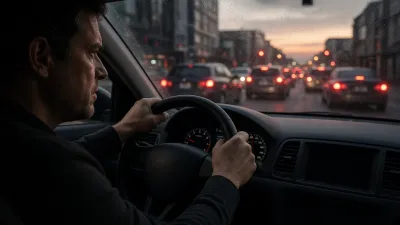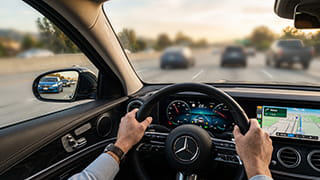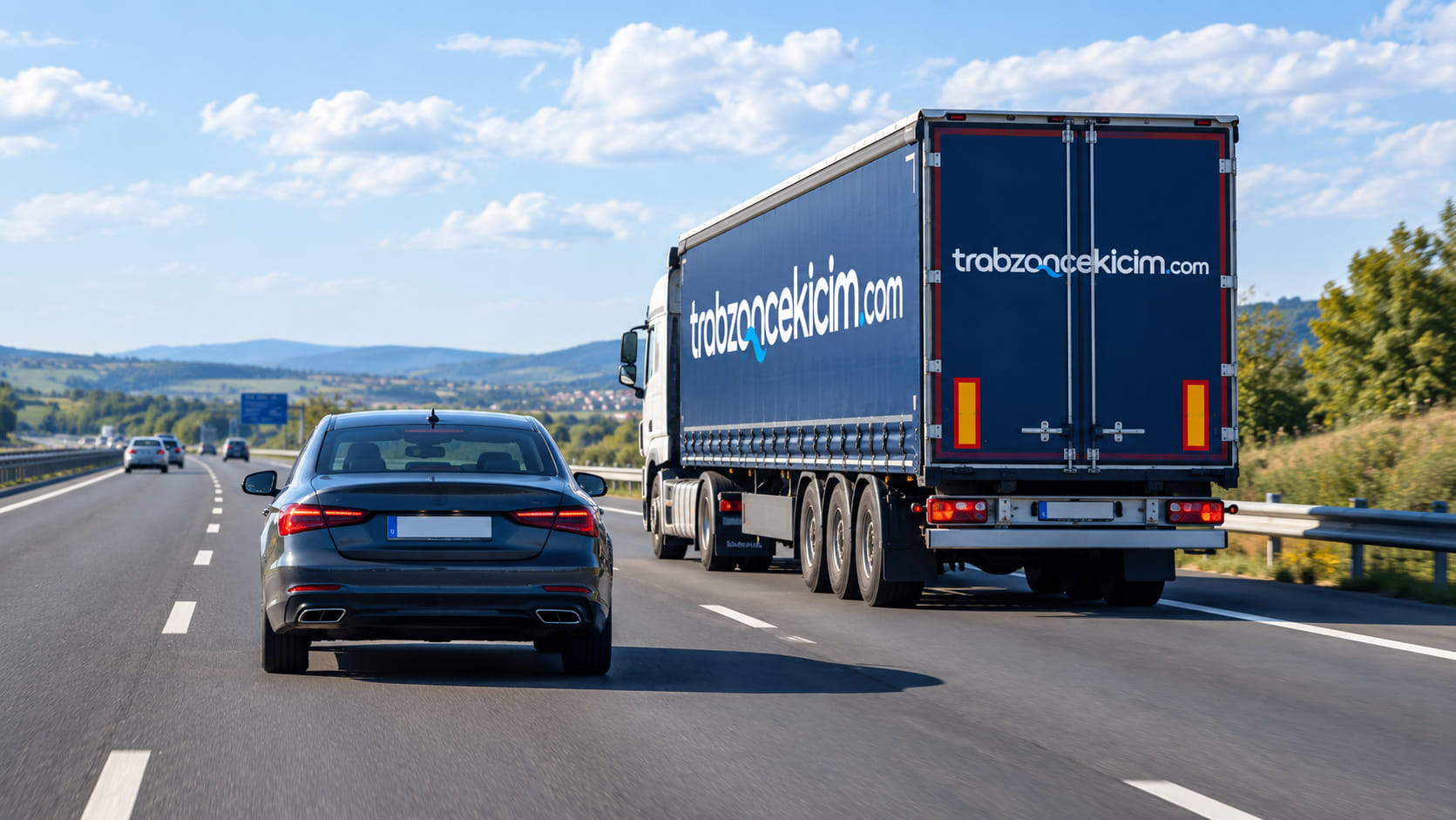
Not every vehicle surrounding us on the road has the same weight, manoeuvrability and stopping distance as our own. A passenger car weighs on average between 1.2 and 1.8 tonnes; a fully loaded articulated lorry, a tipper truck, a concrete mixer or a coach represents an enormous mass that can reach 40 tonnes. When we find ourselves side by side with these giants, most drivers fall into the trap of treating them as nothing more than “big cars”. In reality the field of view, the acceleration and deceleration dynamics, the turning radius, the wind resistance and the braking response of heavy vehicles obey completely different laws of physics from those of a car. Knowing their limits while sharing the same route, understanding the difficulties their drivers face and building a defensive driving strategy around them is the most basic key to removing the risk of a fatal accident.
The anatomy of big vehicles: an enormous mass difference and longer braking distances
The first and most critical fact to understand about heavy vehicles is how they stop and how they accelerate. A loaded 40-tonne tractor unit or tipper truck travelling at 90 kilometres per hour needs almost twice the distance a passenger car requires in order to stop. Pneumatic (air) brake systems take a fraction longer to engage than hydraulic ones; add the vast kinetic energy of the load to that mechanical delay and it becomes physically impossible for a heavy vehicle to stop dead in its tracks. One of the most common and most lethal mistakes car drivers make is pulling in right in front of a lorry or a coach and braking sharply, or closing up the following distance and cutting across its nose.
However experienced the driver of a heavy vehicle may be and however sharp their reflexes, the pushing force created by tonnes of load behind them means the vehicle cannot be stopped in an instant. In congested motorway traffic or on the approach to traffic lights, seeing the wide gap in front of a truck as an “opportunity” and slotting into it means seizing that driver’s vital braking margin. When we are travelling in front of a truck or a coach we should always take the weight of the vehicle behind us into account, avoid sudden braking, signal our intention to turn or stop very early and never narrow their stopping margin.
Four major danger zones: the “No-Zone” blind spots and the mirror rule
The fact that heavy vehicle drivers sit up high does not mean that they can see everything perfectly; on the contrary, they have far wider, deeper and more dangerous blind spots than a car — known in international literature as the “No-Zone”. These blind spots are essentially grouped in four main areas: the 3 to 6 metres immediately in front of the truck’s nose, the huge 30 to 60 metre corridor directly behind the trailer, the strip alongside the driver’s door on the left, and the most dangerous of all, the wide area running along the whole right-hand side. The right-side blind spot is especially deep because the driver sits on the left of the cab and the angle of the right mirror simply cannot sweep the area below the door and along the side of the trailer.
The golden and most practical rule for staying out of these blind spots is the “eye contact in the mirror” principle. If you cannot see the driver of a lorry in its side mirror while you are passing it or following behind it, then be sure that the driver definitely cannot see you either. Trying to slip past a truck blindly on its right, or spending a long time alongside its doors in the right-hand lane, can end in disaster. The driver will look in the mirror, see an empty lane and change lanes straight into you. You should never spend time in the blind spots of heavy vehicles; either accelerate safely out of that area or stay far enough behind to remain in the visible zone.
The art of overtaking: wind turbulence, passing the blind spot and turning room
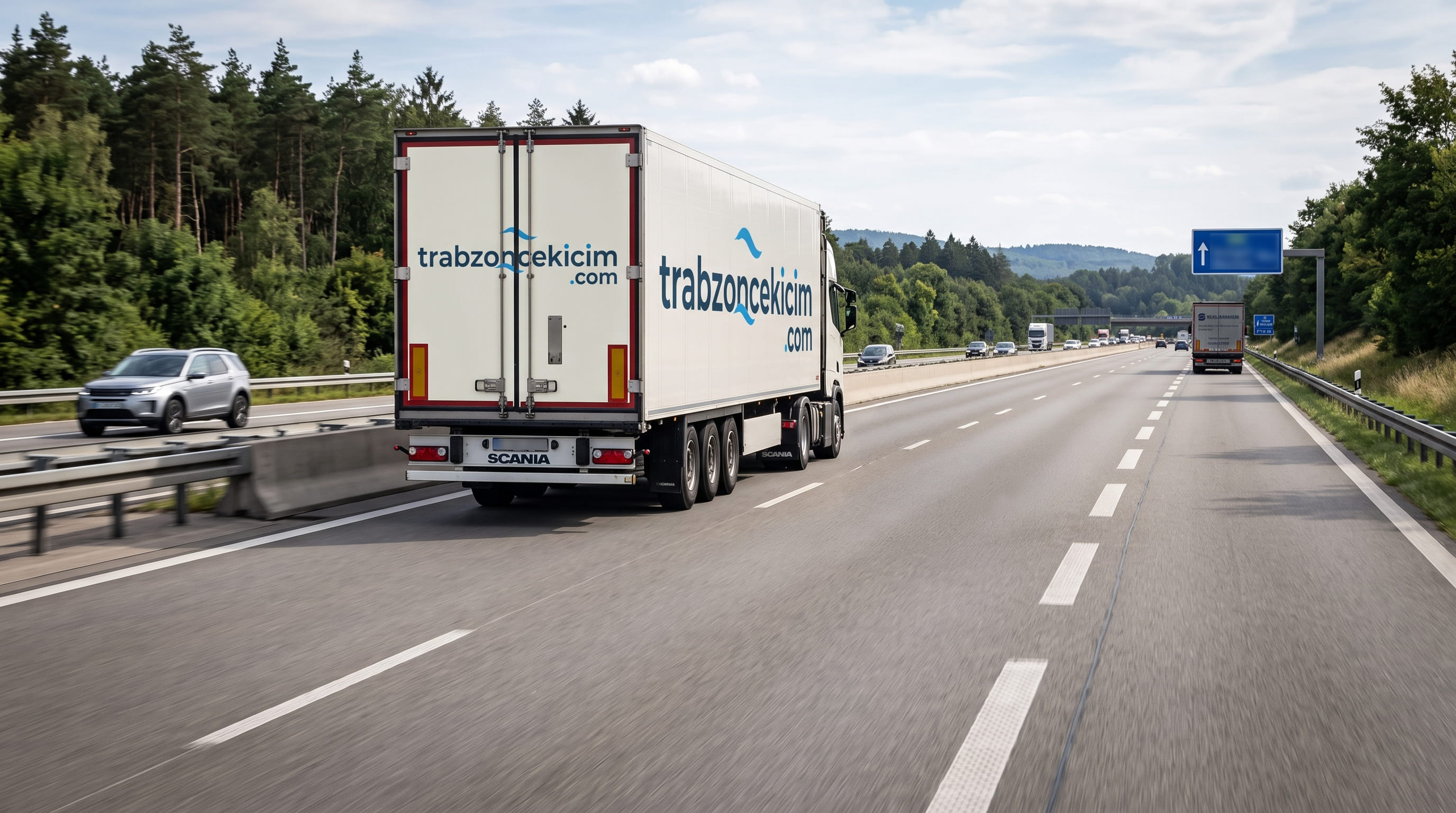
Overtaking a lorry or a long trailer demands far more concentration and preparation than passing an ordinary car. At high speed, heavy vehicles create powerful air turbulence and a vacuum effect around them. The moment you pull out from behind a truck and draw alongside it, your car may first hit a wall of wind and drift slightly; level with the trailer you feel sucked inwards, and as you clear the nose of the cab you take a sudden gust from the side. In wet weather a huge curtain of spray thrown up by the tyres is added to all this. To be ready for these aerodynamic forces it is essential to hold the wheel firmly with both hands throughout the overtake, to speed up the wipers and not to drift away from the middle of your lane.
Once the decision to overtake has been made there should be no hesitation: the side area that sits in the truck’s blind spot must be passed as briskly as possible in the shortest possible time, within the speed limits. Drawing level with a truck and travelling in parallel at exactly the same speed is the biggest mistake you can make. Nor should you cut back into the lane sharply as soon as you are past the cab. You should keep going in your own lane until you can see both of the truck’s headlights and its entire front grille in your rear-view mirror, and only once a proper safety margin has opened up should you signal and settle gently back into the lane.
Respecting bends, tight junctions and wide turning arcs
Long-trailer vehicles and articulated buses are geometrically incapable of taking tight bends the way cars do. The path followed by the front wheels differs from the arc traced by the rear wheels; the rear axles always cut a much tighter line towards the inside of the bend or the turn. Because of this physical necessity, a lorry that wants to turn right has to swing out wide to the left first. If an inexperienced driver behind reads this as “the lorry is moving into the left lane” and dives into the gap opening up on the right, they end up beneath a huge trailer closing to the right, at risk of being crushed and trapped.
When you see a heavy vehicle signalling right or left at a junction or at the entrance to a narrow street, you should not move into any gap beside it and should wait patiently for it to complete the turn. At roundabouts, too, heavy vehicles occupying two lanes at once is not an arbitrary move but a compulsory manoeuvre that keeps the trailer off kerbs, central reservations and lighting columns. Granting them the wide manoeuvring corridor they need prevents both jams and collisions before they can start.
Gradients, climbing and descending dynamics and escape-lane awareness
In mountainous terrain, on steep ramps and on long descents, heavy vehicles struggle with very different driving challenges. A loaded truck climbing a steep hill has to change down and its speed may fall to 20-30 km/h. Sitting impatiently on the bumper of these vehicles on an uphill stretch increases both the risk of the vehicle rolling back and the danger created by stones, gravel or objects that may fall from the load. The right thing to do is to wait at a safe distance behind until the road and the view of the oncoming lane are completely clear for an overtake.
Long, steep descents hold a far greater danger for heavy vehicles. Constant use of the brakes can badly overheat truck linings and lead to the mechanical friction failure known as “brake fade”. If you notice a truck’s engine note rising on a descent or realise that it is using its exhaust brake (retarder), you should take care not to stay in front of that vehicle and not to block its escape lanes. Never using the entrances to the emergency escape ramps found on mountain roads and motorway descents as a waiting or rest area, never slowing down in front of them and keeping those areas completely clear at all times as the life-saving last refuge of a heavy vehicle whose brakes have failed is a vital piece of road awareness.