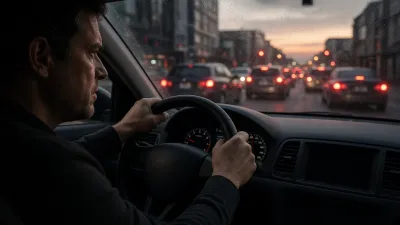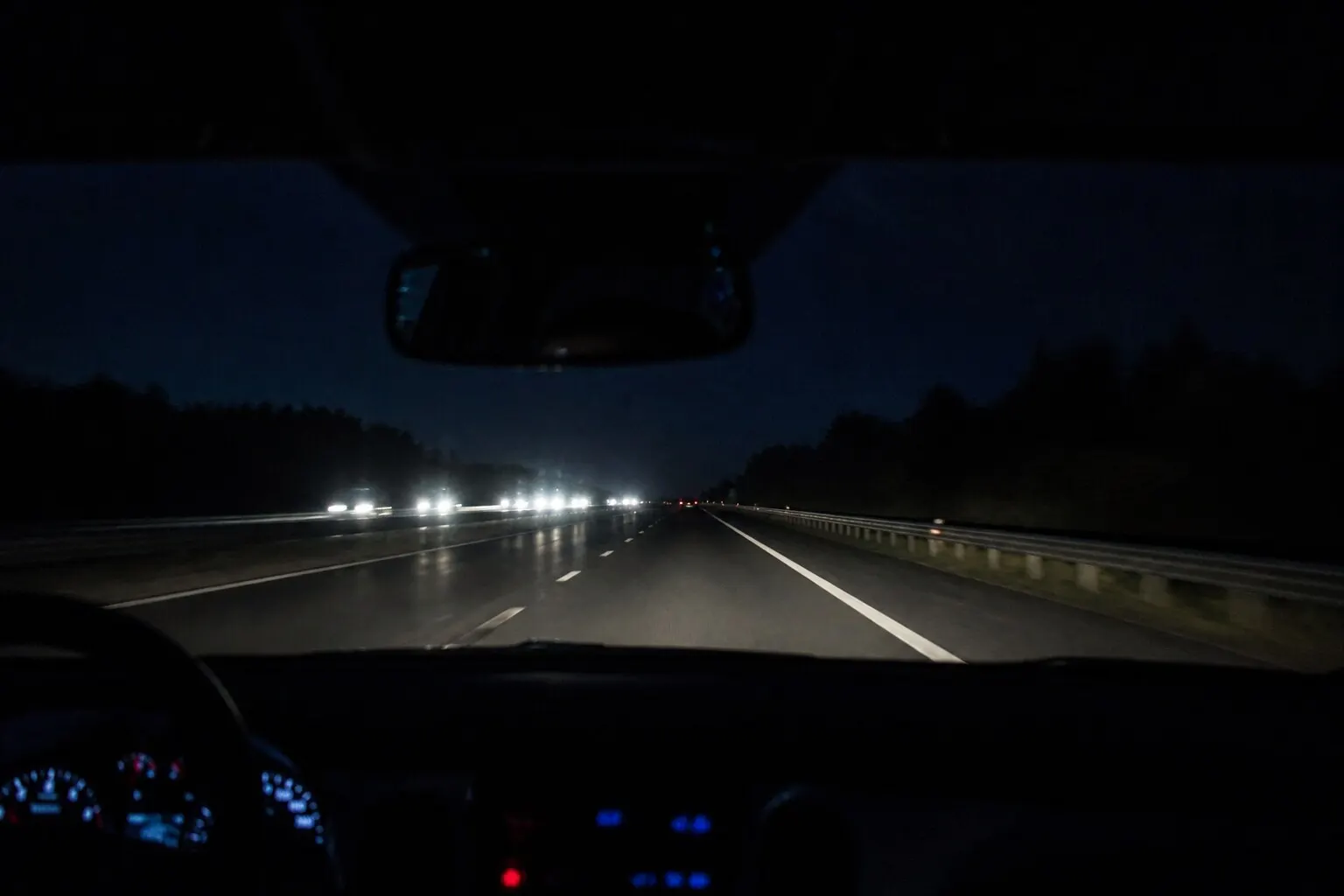
Driving at night is not simply “darker” than driving by day. Your field of view narrows, your sense of distance is distorted, fatigue builds and the cost of small mistakes grows. Many drivers switch to automatic mode on a familiar road; yet night is exactly when habit misleads us most. This article is a general guide. It looks in detail at headlight use, oncoming light, fatigue, speed and vehicle preparation. The aim is not to frighten you; it is to simplify the decisions that work on a road at night.
Why night vision is shorter
The human eye adapts to darkness, but peripheral vision and colour discrimination weaken. A pedestrian, an animal, a cyclist or a broken-down car at the roadside is noticed later than it would be in daylight. The area outside the cone lit by your headlights is almost as good as “not there”; that is why you have to set your speed not only by the legal limit but by the distance you can genuinely see. If you are still travelling fast at the point where the lighting ends, your chances of stopping for a sudden obstacle are reduced.
The sense of distance is distorted at night too. Oncoming headlights, reflections off wet tarmac and city lights all mislead your feeling of depth. You may think you are “close enough” to the brake light of the car ahead when you are in fact far too near. That is why deliberately increasing your following distance is a basic rule for the dark. On nights that combine with rain in particular, reflections in the glass can make you lose the lane markings; cleaning the windscreen and the wipers is therefore more critical than it is by day. A dirty windscreen scatters headlight beams at night and blurs your view; wiping the glass before you set off is a small but effective precaution.
When the street lighting stops abruptly on the way out of town, your eyes need time to adjust. Hold a steady speed through transitions like the exit of a tunnel, the far side of a motorway toll booth or the turn onto a village road. Pressing on because “my eyes will adjust” means creating a blind spot for the first few seconds. The good driver at night does not make assumptions about the area they cannot see; they slow down in it. On a familiar route, saying “I know this stretch by heart” is one of the most common sources of false confidence in the dark.
Headlight use and light from the oncoming lane
Dipped beam is the backbone of night driving. It lights your way and makes you visible at the same time. Main beam extends your view on an empty road, but it dazzles when there is a car coming towards you or one in front; dipping in good time is both courtesy and safety. Running the fog lights constantly for “more light” does not help in most conditions; a badly angled fog light can throw glare onto the road and spoil your own view.
If main beam from the oncoming lane is bothering you, shifting your gaze slightly to the right, onto the lane marking, helps your eyes recover. Flipping the interior mirror to its night position softens the dance of headlights behind you in the glass. Your own headlight alignment matters as well: a light that strays upwards annoys the oncoming driver, while one aimed too low shortens your own view. If the headlight lenses are hazy or misted, night performance drops in a way you would never notice during the day.
Visibility is just as critical when you park, stop in an emergency or pull over briefly. Putting on the hazard lights, pulling into a wide, well-lit lay-by if you can, and having a vest to hand all protect you if you break down at night. Saying “I will just stop for a minute” on the edge of a dark lane means a sudden obstacle for the driver coming up behind. Stopping at night has to be planned and visible.
Fatigue and loss of concentration
The invisible side of night-time accidents is fatigue. Heavy eyelids, frequent yawning, drifting within the lane or not remembering the last few kilometres are serious warnings. Carrying on because “it is not far now” does not end the tiredness; it extends the risk. On long intercity returns, after a meal and after midnight in particular, the loss of attention accelerates. Taking a break is not lost time; it is a safety investment.
Phones, loud music and arguments inside the car cost more at night. When your view is already narrowed, your attention must not be split into a second channel. Use the navigation by voice and leave messaging for the car park. Caffeine can buy you a short burst of alertness but it does not replace sleep; “solving” two hours of lost sleep with a coffee is not a reliable strategy. When in doubt, pulling into a safe rest area and resting your eyes is the right call. A fifteen-minute break can noticeably restore the next hour of driving.
Passengers carry responsibility too. If the driver is nodding off, talking to them, suggesting a break or taking over the wheel (if that is appropriate) saves lives. A culture of “leave it, they will manage” creates risk on a night road. Rhythm matters more than ego when driving at night: regular breaks, enough water, avoiding heavy meals and a realistic arrival plan. Instead of setting off at midnight for an early morning appointment, travelling the night before is often the safer choice.
Speed, distance and lane discipline
Raising your speed at night because “the road is empty” is common. An empty road, though, means that an obstacle will be seen later. Choose your speed according to the safe stopping distance your headlights actually cover. Increase your following distance compared with daytime; a sudden brake or lane change by the car in front leaves you less time to react. Do not rush an overtake; overtaking at night means managing both the oncoming lane and the speed difference at the same time.
Staying within your lane is harder at night because the roadside references are fewer. Lane-keeping systems can help but do not replace you; on a tired or distracted driver the warnings simply multiply. Sudden movements right and left raise the risk of sliding on a wet or dusty edge. Signal early, check the blind spot over your shoulder, and remember that the headlight of a motorcycle or a bicycle can look like a “single point” from a distance. A car with one working headlight or faulty lighting also distorts your sense of distance at night; do not overestimate the speed difference as you approach.
In town, pedestrian and scooter traffic continues at night. A pedestrian in dark clothing, someone waiting at a stop or a car pulling out of a gateway can all fall outside your headlight beam. Reducing speed early at junctions is safer than the reflex of “the light is green, hit the throttle”. Spending the red light on your phone and then pulling away in a panic on green is another common mistake; keep the pull-away calm and scan your surroundings. Even outside school hours, do not cross pedestrian crossings on assumption; you notice moving silhouettes late in the dark.
Vehicle preparation and unexpected stops
Checking your headlights, brake lights, indicators and number plate light before you set off at night takes five minutes. If the battery is weak, starting problems increase in cool, dark conditions. Tyre pressure and tread condition may not be as critical as visibility, but they determine your grip in a sudden manoeuvre. Misted glass, dirty headlights and an empty washer bottle make the night unnecessarily hard. Keeping a vest, a warning triangle and a simple torch in the glovebox makes you visible if you break down.
If you are stranded, a safe lay-by comes first, then the hazard lights and the vest. Know exactly where you are; a description of “we are around here somewhere” in the dark is hard on both the crew and on you. Waiting for help at night is more stressful than in daylight; staying calm, never turning your back on the traffic and waiting on the barrier side where possible all reduce the risk. If you have children or elderly passengers, keeping them on the safe side is the priority. The premise of this article is this: night driving is not a matter of courage but of visibility, headlight discipline, fatigue management and a cautious tempo. A driver who protects those four things does not treat darkness as an opportunity to “go faster”; they drive with more foresight. At night, arriving awake and in control matters far more than simply arriving.