Rain is one of the most common and most underestimated risks in traffic. When the tarmac is wet, the grip between tyre and road falls, visibility shortens and braking distances lengthen. Many drivers carry on with their dry-weather habits; in reality, safe driving in the rain means covering the same route “a little slower and a little more thoughtfully”. This article is a general guide: it looks in detail at how a wet road behaves, at aquaplaning, at following distance, and at visibility and tyre preparation. The point is not to frighten you; it is to clarify the decisions that actually work on a wet day.
Why a wet road is more dangerous
On dry tarmac the tread “grips” the road; once a thin film of water forms, that grip weakens. In the first few minutes of rain in particular, the dust, oil and rubber residue on the road mix with the water and the surface becomes briefly even more slippery. That is why relaxing because “it is only light rain” is misleading. In a heavy downpour, the capacity to push water out from under the wheels is limited; as speed rises the tyre can no longer cut through the water and the car may lose grip for a moment. A driver who takes the same bend without a problem in dry weather can find the car sliding if they enter it at the same speed on a wet surface.
Braking changes on a wet surface too. On cars with ABS, vibration through the pedal is normal; in a moment of panic the question is not whether to press the brake but how to keep control of your direction. Turning the wheel suddenly and widely can send the rear end sliding. The good driver in the rain is the one who plans manoeuvres early: entering a turn late, rushing an overtake or changing lanes to chase a gap all magnify the risk. The reflex of “I will give it a bit more throttle and make it in time” is one of the most expensive habits there is on a wet road.
Standing water along the road is a separate danger. It is hard to judge the depth of a puddle through the windscreen. Hitting water at high speed carries the risk of aquaplaning as well as an impact on the suspension and the tyre sidewall. Where possible, slow down and cross the water in as straight a line as you can; flooring the throttle to pull yourself out destroys your control. Remember that motorcycles and scooters are more vulnerable at these spots; leaving extra room when you overtake them or pass by protects you and them alike.
Speed, following distance and aquaplaning
The most concrete rule in the rain is to reduce speed and increase your following distance. The “two second” rule is often recommended in dry weather; on a wet surface, stretching that to three or four seconds is more realistic. When the car in front brakes hard, you do not have to stop at the same moment; the gap between you is a cushion for your reaction time and the longer braking distance. Sitting on someone’s bumper in heavy traffic in particular can turn a small slide into a chain collision. Driving below the speed limit is not “being slow”; it is choosing the right tempo for a surface with reduced grip.
Aquaplaning is the point at which the tyre starts to skim over the water. The signs include the steering going light, the engine revs suddenly rising, or the car responding late to your inputs. In that situation, instead of braking hard, lift off the throttle gently, try to keep the steering straight and stay calm until you feel the tyres regain grip. Panic braking and a sudden swerve only make the slide worse. Once grip returns, do not jump back onto the throttle either; feel the car “settle” onto the road again first, then build the tempo up slowly.
Overtaking and changing lanes cost more in the rain. As the speed difference grows in a wet lane, the margin for error shrinks. Getting caught on an amber because “I have to make it”, entering a junction at the last moment, or weaving right and left to find space in the flow are the moves that most often cause regret the instant visibility deteriorates. Deliberately adding a buffer to your arrival time in the rain lowers both stress and risk. Leaving early, or accepting that you will be five minutes late, is usually the cheapest safety investment you can make.
Visibility, lights and the wiper system
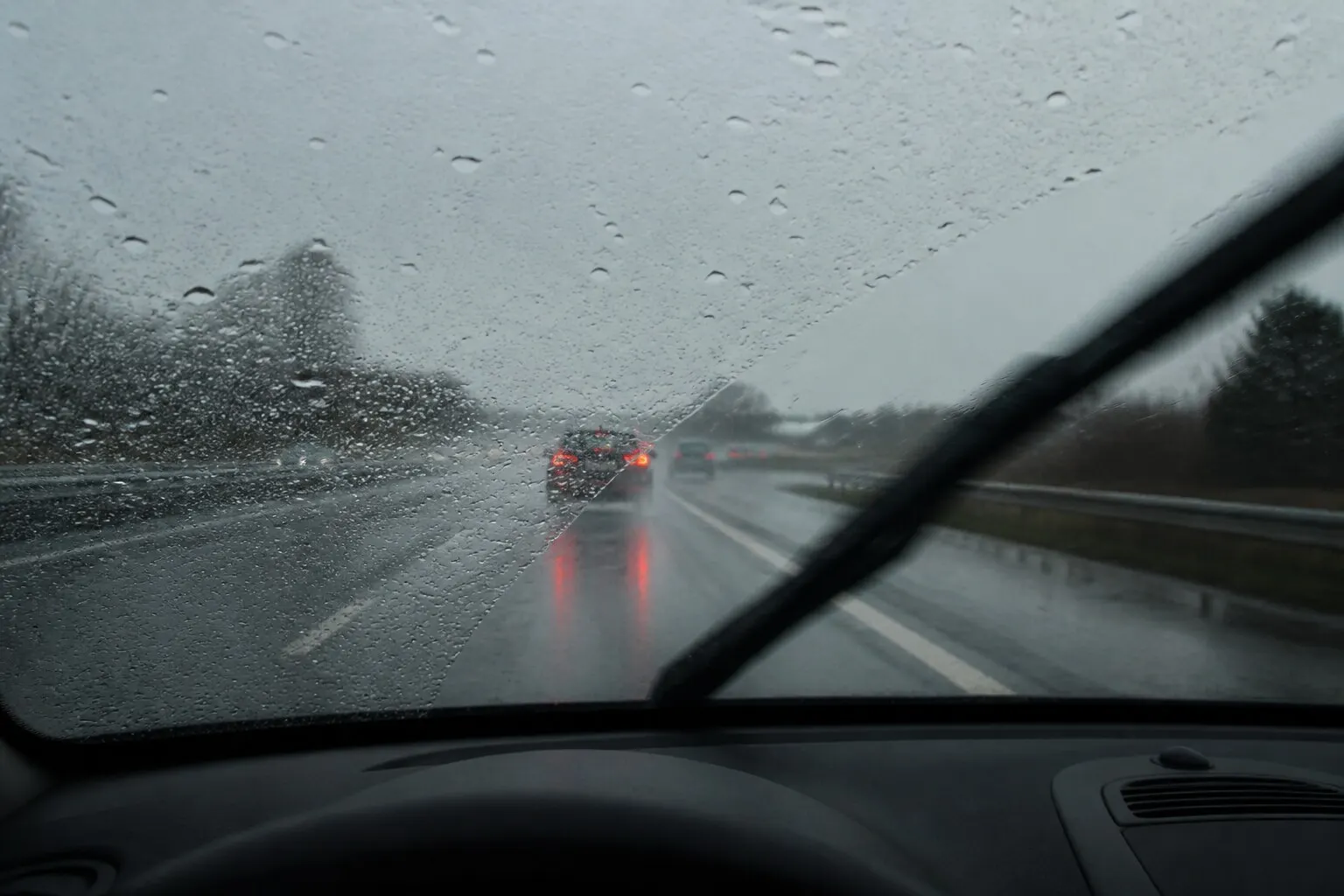
Part of the accident risk in the rain comes not from sliding but from not seeing. A misted windscreen, worn wiper blades and dirty headlights combine with darkness to make you misjudge distance. Switching on your dipped beam does not only light your way; it makes you more visible from behind and from the front. Using main beam at random in rain and fog can dazzle the oncoming driver through reflection, so use it deliberately and briefly. If the headlights of the car behind are dancing in your windscreen, flipping the interior mirror to its night position reduces eye strain.
If your wiper blades have hardened, leave streaks or are “dragging” across the glass, visibility can vanish in an instant in the rain. Checking the wipers as the seasons change is a cheap precaution with a high return. Top up the washer fluid; mud and insect residue mixed with rain leave the wipers helpless. If the inside of the glass mists up, use the air conditioning or the demist function early. Looking at your phone splits an already narrowed field of view; sort out the screen in the car park when it is raining. Using the navigation with voice guidance helps you keep your eyes on the road.
Tyres and vehicle preparation
Safety in the rain largely comes down to the tyres. As the tread depth falls, the ability to clear water through the grooves drops; if the pressure is wrong, the contact patch is distorted. Leaving aside the debate over seasonal tyres, setting off on a long trip without at least checking the tread, cracks, bulges and correct pressure is a risk. A spare tyre or a repair kit is a reminder of just how hard changing a wheel on a wet verge really is. Having tyres at a similar level of wear on the same axle also matters for directional stability.
Besides the brake pads, the discs and the wipers, headlight alignment matters too. If one headlight points down and the other strays upwards, both you and the oncoming driver are misled on a wet road. The battery and the starter system work harder in wet, cool weather; if the car is “hard to start”, have it checked instead of putting it off. Keeping a vest and a warning triangle in the glovebox protects your visibility if you break down. Being stranded in the rain is more stressful than in dry weather; preparation reduces that stress. A short pre-drive check (tyres, wipers, washer fluid, lights) takes five minutes; in preventing an accident it can be worth hours. Doing those checks before the rain starts beats making hurried decisions in the middle of a downpour.
Avoiding sudden manoeuvres in town
In city rain, pedestrians, motorcycles, scooters and a suddenly stopping bus all appear at once. Water splashing up from the kerb startles a pedestrian; if you swerve on reflex, the driver behind is put at risk. Reduce speed early when you turn right or left at junctions. Wet crossings and painted lines are especially slippery; braking hard on them can spin the car. Pulling out of a parking space with a shoulder check and slow movement matters even more on a wet surface, because it is hard to “gather the car up” quickly when grip is low.
The pressure of “I just need to make it” is the biggest trap in heavy rain. Being late for an appointment is cheaper than a life. Postpone the trip if you can, or take a quieter route. If public transport or a short walk is an option, thinking about it during a downpour is a safety decision too. Loud sound, arguments and phones while driving damage your economy of attention; in the rain the sounds outside (horns, sirens, tyre noise) are already harder to hear. A calm tempo, early signals and a generous following distance are the most reliable trio for a rainy day. These habits are not dramatic, but they create the invisible difference behind the statistics. The rain passes — the right driving choices leave behind a lasting culture of safety.