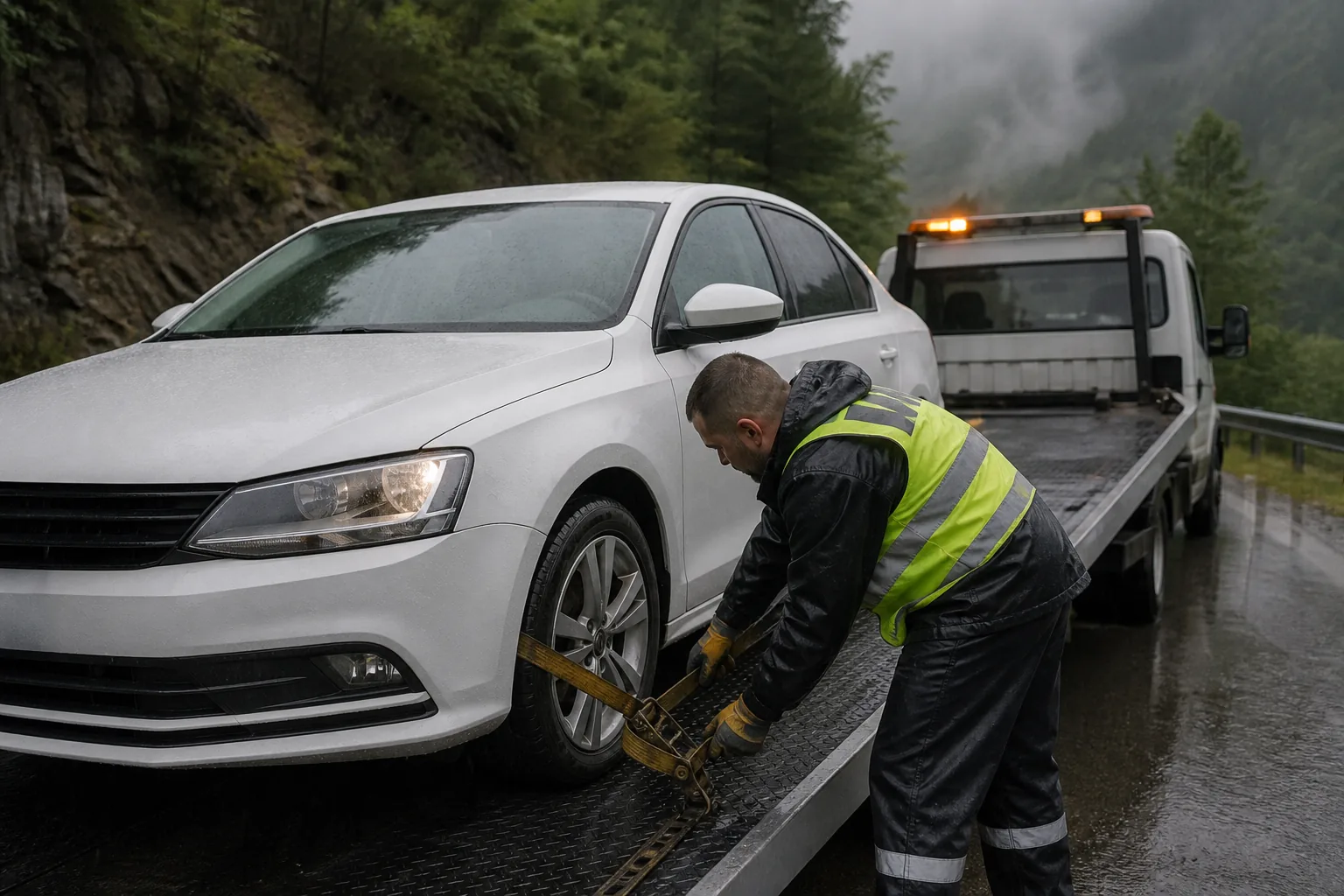
When people hear the word “tow truck”, many still picture “hook up a rope and pull”. On modern cars, though, and especially on automatics, dual-clutch gearboxes, electric drivetrains and low-slung sports models, being dragged over any distance carries serious risk. At Trabzon Çekicim the priority is controlled, safe loading: the car is not dragged along the ground, it is brought onto the bed, secured with straps and unloaded safely at the point you choose. In this article we explain why the method matters, who it is critical for, what we watch out for on Trabzon’s roads and what to keep in mind when you call.
The hidden cost of dragging
Being pulled on a rope over a long distance can strain the gearbox, the differential and the underbody. In automatic boxes, the oil pressure and the gear set take unexpected loads when the car is towed on its wheels. Electric cars have different drivetrain and battery protection arrangements; the wrong kind of transport can create problems for both safety and the warranty. On low sports cars the bumper, the exhaust and the sump are all at risk of grounding. In short: a drag that looks cheap can turn into a much more expensive bill at the garage.
The aim of controlled loading is to bring the wheels, or the appropriate lifting points of the car, safely onto the bed, secure the vehicle and limit any movement throughout the journey. In Trabzon, rain, fog and steep district roads make that need even greater; an unsecured car can shift on a bend. Safe loading protects your car and the other drivers on the road alike.
The “make it quick” trap
After a crash or a breakdown, everyone wants the road cleared fast. That is the right goal — but speed does not mean scraping the car along the tarmac. Controlled loading may take a few minutes longer, and in return it protects your bumper, exhaust, gearbox and tyres. At Trabzon Çekicim the aim is both to reopen the traffic and to deliver the car in one piece.
Who is it especially critical for?
Automatic cars, hybrids and electric vehicles, low sports models, damaged vehicles after an accident, cars whose steering is locked or whose wheels will not turn, and motorcycles. On a motorcycle we prefer upright transport with straps rather than laying it on its side; that is how the plastic panels and the steering geometry are protected. The same logic applies to light commercial vans: equipment suited to the vehicle type, and loading planned in advance.
Damaged cars and locked steering
On cars with locked steering after a crash, wheels that will not rotate or heavy damage, the loading plan changes. The team carries out a controlled manoeuvre with equipment suited to the vehicle type; the aim is to recover and secure the car without adding secondary damage. Short notes on the call such as “the steering is locked”, “the front suspension is broken” or “the bonnet is crumpled” speed up the choice of the right team.
Electric and hybrid vehicles
Electric cars carry high-voltage warnings and manufacturer recommendations for transport. Safe loading moves the car without putting unnecessary stress on the battery and drivetrain. It is enough to tell us on the call that the vehicle is electric or hybrid; the team will plan accordingly. The fixed price upfront is still agreed on the basis of the pick-up and drop-off points.
SUVs, 4x4s and light commercials
Tall vehicles take up more room; their panels and side steps need care during loading. On light commercial vans the wheelbase and the load space affect the plan. Saying “SUV” or “van” on the call makes the choice of team and bed clear. Heavy lorries and construction machinery need a different crew; Trabzon Çekicim focuses on cars and light commercials.
Why does it matter even more on Trabzon’s roads?
The coastal D010 may look flat, but there is heavy lorry traffic, a real risk of aquaplaning in the rain and loss of visibility at night. On the Maçka, Çaykara, Zigana and high-pasture climbs, gradients, bends and narrow surfaces make manoeuvring harder. Controlled loading can take a few minutes longer; in return you gain safety for both the vehicle and the road. Reopening the road quickly in accident recovery is part of the same discipline: a safe lane, loading that is fast but not careless, and traffic moving again.
Narrow streets and sloping lay-bys
In the narrow streets of Ortahisar or in sloping district lay-bys the room to manoeuvre is limited. The team first chooses a safe loading point; if necessary the car is moved a short distance under control to a more suitable spot. That plan comes together faster thanks to the pin and the brief directions given on the call. A clear pin instead of “roughly around here” cuts out wrong turns into the wrong street.
How it relates to insurance and the price upfront
If your policy covers transport, ask for an invoice. The price is settled upfront; no argument about damage opens up afterwards because dragging was “cheaper”. At Trabzon Çekicim there is no separate surcharge at night or on public holidays. The figure we agree on is the price of the service including controlled loading and safe unloading. There are no hidden lines.
Assessment and secondary damage
In an assessment after an accident it matters that existing damage can be told apart from scratches that might occur during transport. Controlled loading and strapping reduce that argument. Taking photos (before and after loading) is in your interest and the team’s. Together with the invoice and the accident report, those records make your insurance paperwork easier.
How do you describe it on the call?
Send your location on WhatsApp, write down the vehicle type and add a note such as “automatic / electric / damaged / motorcycle”. You do not need to say “please don’t drag it” — controlled, safe loading is our standard. Make the destination garage or address clear; in the same conversation you will be given the fixed price upfront and an estimated arrival. The 0462 606 06 21 line is open 24/7.
The same discipline on intercity transfers
On runs to Giresun, Rize, Gümüşhane or further afield the distance grows, so securing the load and unloading safely become even more critical. The price is again agreed upfront on the basis of the pick-up and drop-off points. Over a long distance, strapping that limits movement protects both the car and the traffic. Our intercity pages carry route-by-route information; use the same WhatsApp line when you call.